
 Inquire
 Apply
Apply Give
Give My Wakefield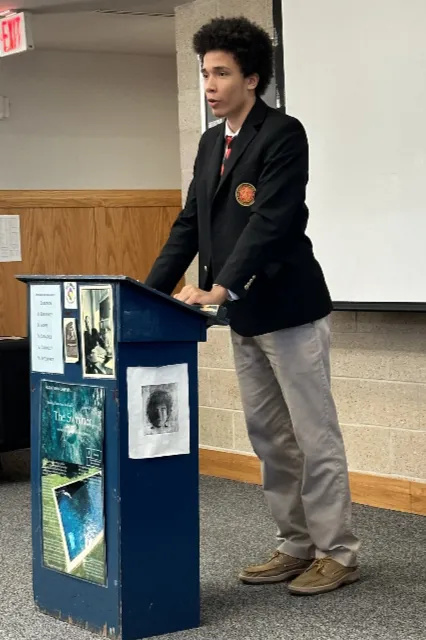
Scenes from School: "Words and Ideas Can Change the World"
April 6th, 2026



Scenes from School:
"Words and Ideas Can Change the World"
~ John Keating from Dead Poets Society
At the Junior Thesis Forum, students engage deeply with literature—crafting arguments, defending ideas, and discovering the power of their own voice.
By Matt Zontine, Academic Dean & English Department Chair
About This Series: Each month, Wakefield’s Upper School Academic Dean and Middle School Advisory Dean share reflections on the life of the school — moments of discovery, collaboration, and joy that unfold beyond the traditional classroom. We’re pleased to share some of these stories here, offering a glimpse into the spirit of learning that defines Wakefield.
On an evening in early March, the 11th-grade class experienced one of many rites of passage that Wakefield students encounter: the Junior Thesis Forum. Having written a twelve to fifteen-page research paper on a novel or play of their choosing, the forum is the culmination of all the work students have completed in their Composition course this year.
As Mrs. Keturah Maraska explained in her opening remarks, “In developing their thesis statements, these students took the opportunity to think for themselves and trust their own interpretations of the work. But the path to this evening was not always a straight line. The process has been both exciting and difficult. There were times when this night felt out of reach. These students had to restart, revise, and edit their work again and again. They learned that finding your own voice takes a lot of persistence and hard work.”
The forum took place at two locations, with each hosting two sessions. In the library, Mrs. Maraska moderated the sessions on “Gender Expectations and Defying Domesticity” and “History and The Power of the Emblem.” In the lecture hall, Mr. Zontine moderated sessions on “Dystopia and the Architecture of Control” and “Guilt, Regret, and the Fractured Hero.”
The forum consisted of two parts: the presentation and the Q&A segment. Each student read a two to three-minute speech in front of classmates and family guests that encapsulated the focus of their paper, and then they were given two questions to answer regarding their work.
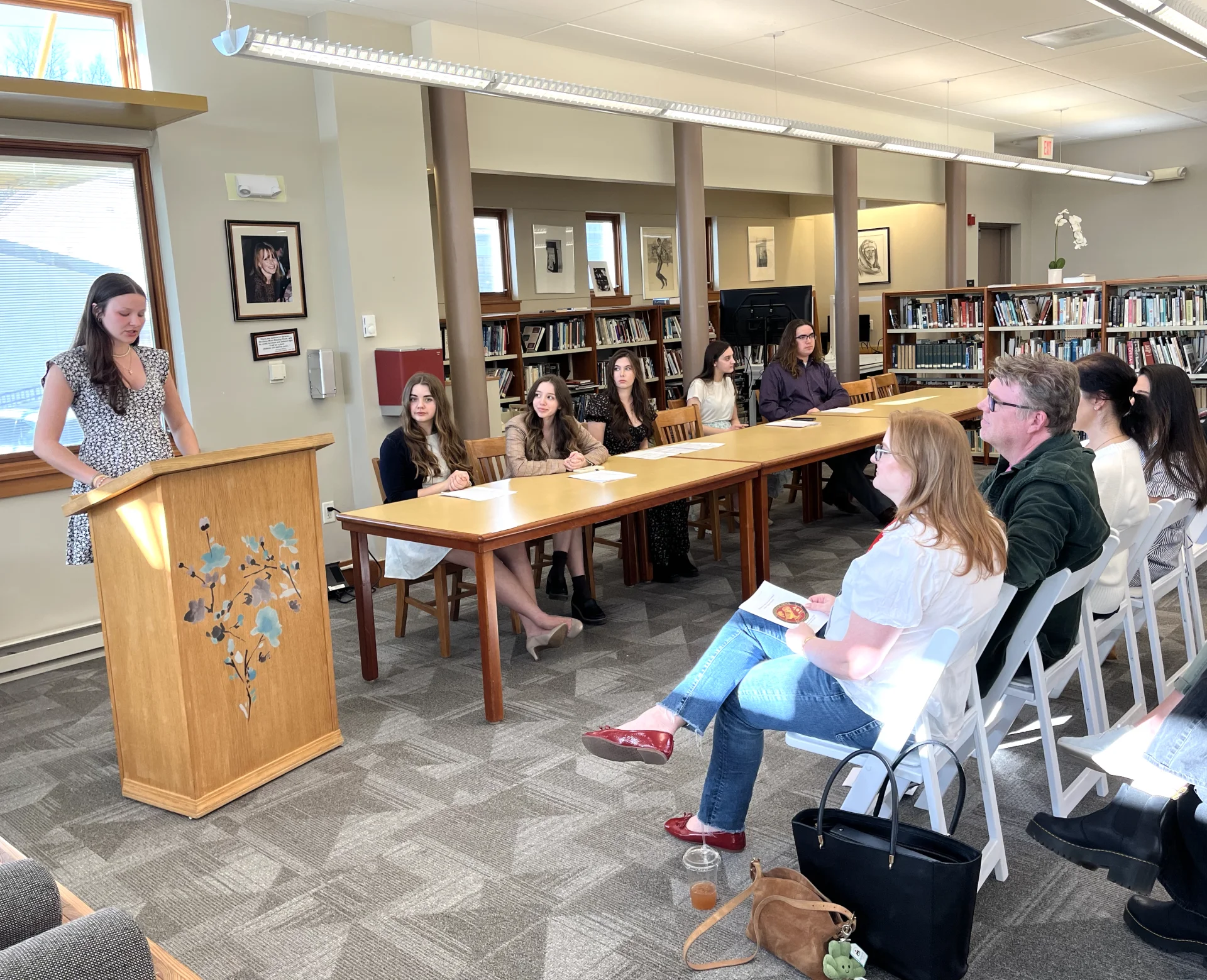
Below is a sample of questions that students were asked.
In Jane Austen’s Pride and Prejudice, the author seems to reward Elizabeth with love and wealth for staying true to her virtues. Is Elizabeth’s happy ending a form of wish-fulfillment for Austen, or is it a rhetorical tool used to convince her readers that a woman's integrity eventually pays off?
The fence in August Wilson’s Fences serves as both a barrier and a prison that Troy creates to protect his family. Rose wants the fence to keep her loved ones in, while Troy uses it to keep death and phoniness out. At the end of the play, did the fence protect the family from the world, or did it just isolate Troy from the people who loved him?
Although the evening is not without its stress for the junior class, the experience underscores the magnitude of the students’ impressive accomplishments. Jacob N., who recited his speech from memory, prepared for the evening by “reading his script over and over again. I felt more comfortable [memorizing the speech], not worrying about looking up and down.”
 When asked to explain her approach, Annabelle P. took a fatalistic perspective, quipping, “I had no choice. I just practiced as much as I could, and if I messed up, I knew to keep pushing forward.” She continued that “as much as it tortured” her, she feels that the Junior Thesis forum has “value.” For next year’s junior class, she offers the following advice: “Having confidence in yourself comes from knowing what you are doing.” Thus, practice, practice, practice.
Click on the link to see the titles for all of the Junior Thesis papers.
Other Articles to Consider...
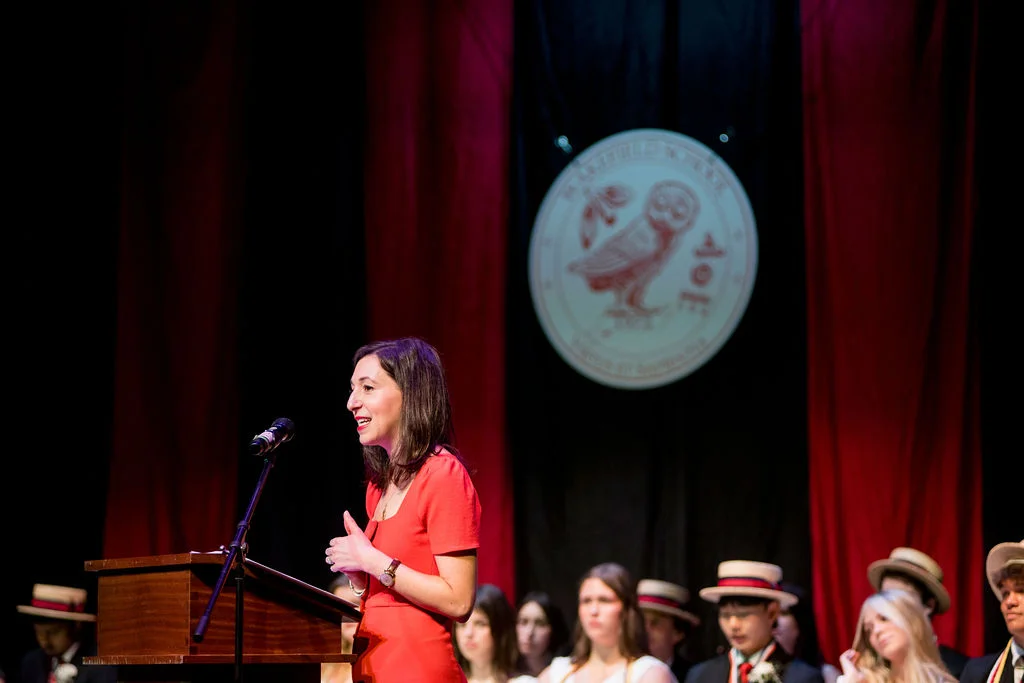 Jun23Curiosity, Meaning, and Service: Rachel Squire Munson ’06 Addresses the Class of 2026
In her Commencement address to the C...See Details
Jun23Curiosity, Meaning, and Service: Rachel Squire Munson ’06 Addresses the Class of 2026
In her Commencement address to the C...See Details Apr1Strengthening Leadership to Support Wakefield’s Growing VisionWakefield School is strengthening its le...See Details
 Apr1From the Owl's Nest: Familiar Faces Worth Celebrating (Spring 2026)
The Spring 2026 edition of From the ...See Details
Apr1From the Owl's Nest: Familiar Faces Worth Celebrating (Spring 2026)
The Spring 2026 edition of From the ...See Details Apr1In the Spotlight: Wakefield’s The Play That Goes Wrong Featured in Middleburg Life
Published in: Middleburg Life &...See Details
Apr1In the Spotlight: Wakefield’s The Play That Goes Wrong Featured in Middleburg Life
Published in: Middleburg Life &...See Details



 News
News Thought Leaders


