
 Inquire
 Apply
Apply Give
Give My Wakefield
AI in Education: The Wakefield Way
October 1st, 2025



AI In Education: The Wakefield Way
Balancing Innovation with Character, Curiosity, & Care
By Elise Scalise
Published in: Warrenton Lifestyle Magazine - October 2025, p. 10 & Haymarket Gainesville Lifestyle Magazine - October 2025, p. 8
“Students are preparing for a world where AI is as common as calculators, search engines, or word processors. To thrive, they must know not only how to use these tools but also how to question them, verify them, and avoid leaning on them as crutches.”
At Wakefield School in The Plains, education has always been about more than test scores and transcripts. The mission centers on developing character, curiosity, and the clear voices the world will always need. In that pursuit, the school is both open to innovation and cautious about anything that threatens the foundation of learning: integrity, critical thinking, and responsible citizenship.
Artificial Intelligence (AI) sits at the crossroads of opportunity and challenge. Its ability to explain concepts, provide instant feedback, and generate ideas makes it a powerful tool for students. Yet, used improperly, it can undermine independent thought and erode academic honesty. Wakefield has taken a deliberate approach to AI, one that prepares students for the future while safeguarding the timeless values that define the school’s culture.
A Philosophy of Integrity and Curiosity
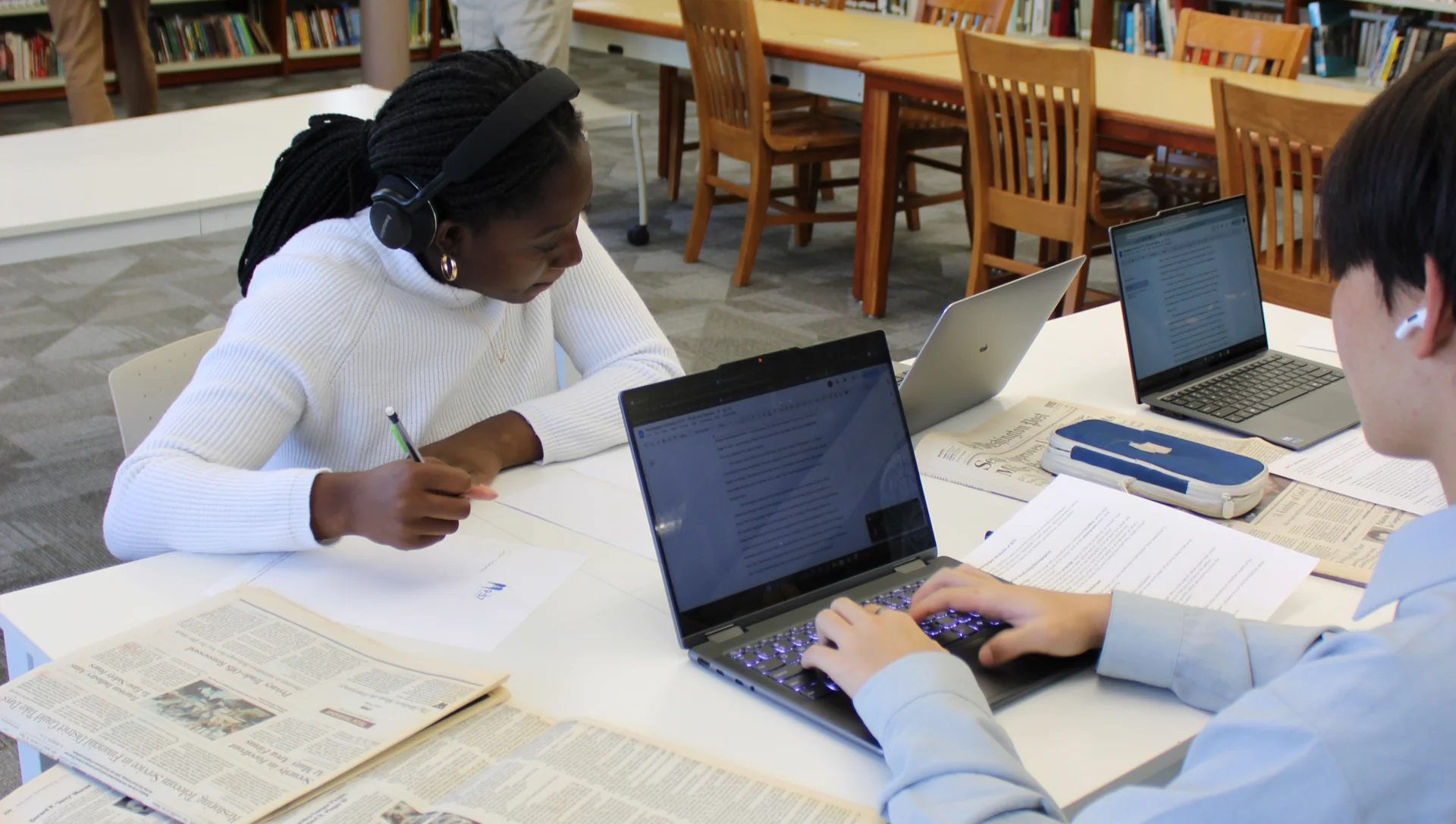
Rather than banning AI outright or embracing it uncritically, Wakefield has developed clear guidelines for its use. At the heart of these guidelines are four principles: integrity, transparency, responsibility, and critical thinking.
Students are reminded that their work must always be their own, even when assisted by technology. When AI is used with teacher permission, its role must be acknowledged openly. Students remain accountable for accuracy, and most importantly, the process of grappling with ideas and solving problems can never be outsourced to a machine.
“I feel that as a faculty, we are just starting to learn what AI can do in the classroom, and it keeps changing so quickly that policies can be hard to keep up with,” shared Mrs. Banning, Middle School Dean of Academics and Advisory. “My hope is that students embrace our mission of character, curiosity, and clear voices through its use. Our guidelines emphasize honesty and integrity by teaching that AI is a tool, one that must be credited like any other resource. Curiosity helps students ask ‘what if’ questions to deepen their learning. And in supporting clear voices, it allows them to refine their writing while still defining their own voice.”
According to Peter Findler, Head of Upper School, “Critical thinking, idea generation, mental struggle, and the like are essential components for building strong learners, and AI’s ability to circumvent this process poses a serious threat. Our mission is to foster the habits of mind that are essential for well-rounded, curious thinkers. Therefore, AI should never be a stand-in for hard work, something that is honorable in and of itself.”
Practical Uses in the Classroom
Wakefield distinguishes between independent uses of AI (limited, everyday applications) and teacher-permitted uses, which are guided by assignment-specific instructions.
Independently, students may turn to AI as a proofreader through the school’s designated Grammarly tool, or as a kind of virtual tutor to clarify concepts and provide examples. These uses echo more traditional resources like textbooks, dictionaries, or study guides.
When teachers allow it, AI can also support brainstorming, summarize dense readings, inspire creative directions, or assist with research. In all such cases, students are required to cite the technology’s role and, more importantly, demonstrate their own understanding in the finished work.
Preparing Students for a Changing World
The careful incorporation of AI reflects a broader truth about Wakefield’s educational vision. Students are preparing for a world where AI is as common as calculators, search engines, or word processors. To thrive, they must know not only how to use these tools but also how to question them, verify them, and avoid leaning on them as crutches.
Wakefield’s policy is about equipping students with discernment. By weaving AI into the fabric of the curriculum in a thoughtful, transparent way, the school is modeling how technology can coexist with timeless values.
At Wakefield, AI is never a shortcut; it is a tool. When used responsibly, it helps students grow into ethical thinkers, creative problem-solvers, and resilient learners ready for whatever challenges the future may bring.
Other Articles to Consider...
 Jun23Curiosity, Meaning, and Service: Rachel Squire Munson ’06 Addresses the Class of 2026
In her Commencement address to the C...See Details
Jun23Curiosity, Meaning, and Service: Rachel Squire Munson ’06 Addresses the Class of 2026
In her Commencement address to the C...See Details Apr6Scenes from School: "Words and Ideas Can Change the World"Part of our Scenes from School series,&n...See Details
 Apr1Strengthening Leadership to Support Wakefield’s Growing VisionWakefield School is strengthening its le...See Details
 Apr1From the Owl's Nest: Familiar Faces Worth Celebrating (Spring 2026)
The Spring 2026 edition of From the ...See Details
Apr1From the Owl's Nest: Familiar Faces Worth Celebrating (Spring 2026)
The Spring 2026 edition of From the ...See Details


 News
News Thought Leaders


