
 Inquire
 Apply
Apply Give
Give My Wakefield
From Curiosity to Confidence: How Wakefield's Inquiry-Based Learning Shapes Lifelong Thinkers
September 1st, 2025



From Curiosity to Confidence:
How Wakefield's Inquiry-Based Learning Shapes Lifelong Thinkers
By Elise Scalise
Published in: Warrenton Lifestyle Magazine - September 2025, p. 10 & Haymarket Gainesville Lifestyle Magazine - September 2025, p. 10
“At Wakefield, curiosity is not a phase to be outgrown but a skill to be nurtured for college, career, and a meaningful life.”
At Wakefield School, learning doesn’t begin with answers; it begins with questions.
Whether it’s a kindergartener asking why the seasons change, a middle-schooler exploring the ethics of artificial intelligence, or an upper school student designing a self-directed capstone project, curiosity is the driving force behind the Wakefield experience. An inquiry-based approach to teaching and learning fosters confident, capable thinkers prepared not only for college but for life.
Learning to Ask the Right Questions
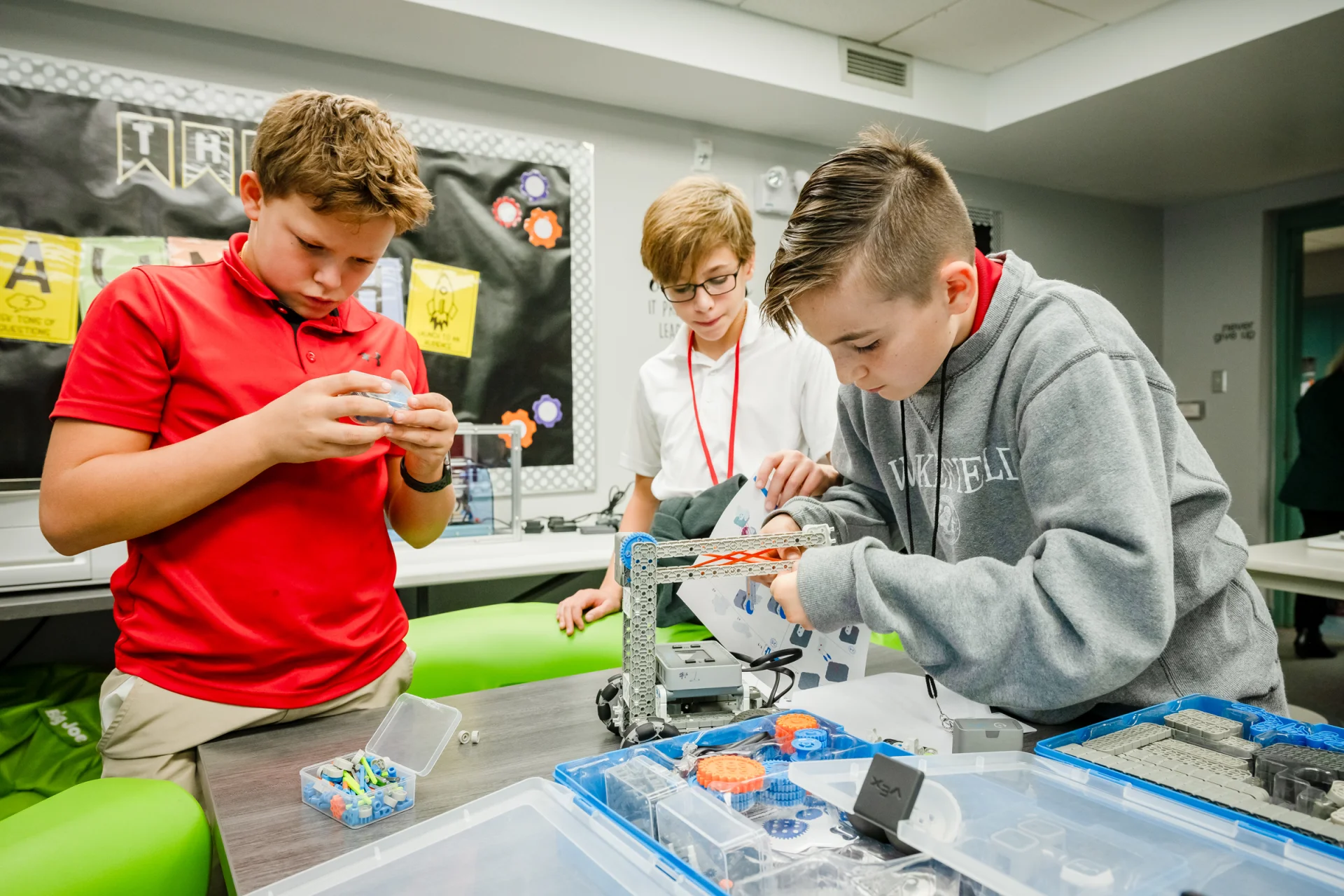
Inquiry-based learning is more than a teaching method at Wakefield. It’s a philosophy. Rather than relying solely on textbooks or lectures, students engage in open-ended exploration. Teachers serve as facilitators and guides, helping students uncover meaning through observation, experimentation, discussion, and reflection.
In the Lower School, students become explorers of the world around them. A second-grade science unit on habitats might evolve into a collaborative art mural, with students illustrating the animals and environments they’ve researched, from arctic tundras to rainforest canopies. Wakefield’s youngest students are naturally curious. They are encouraged to wonder aloud, investigate their ideas, and express their learning creatively.
Critical Thinking in Action
As students move into Middle School, inquiry takes on a deeper dimension: grappling with ambiguity, forming arguments, and connecting ideas across disciplines. In humanities classes, students explore essential questions like “What makes a society just?” or “How does history shape identity?” In science labs, they engage in hands-on labs to test their own hypotheses to encourage deeper-level thinking.
Teachers create learning environments where it’s safe to take intellectual risks, wanting students to know that not having the ‘right’ answer immediately is part of the process. Struggle leads to insight.
Owning the Learning Journey
By Upper School, Wakefield students are equipped to drive their own learning in meaningful ways. Through the Independent Study program, students work with faculty mentors to design and pursue self-directed, specialized courses of study in areas of personal interest, building skills that prepare them for their next adventures post-grad.
This culminates years of building the habits of inquiry: questioning, evaluating, synthesizing, and reflecting. Students leave Wakefield not only with knowledge, but with the skills and confidence to apply that knowledge in creative, impactful ways.
Prepared for a Complex World
In a rapidly changing world, the ability to think critically, ask good questions, and adapt to new information is more important than ever. At Wakefield, curiosity is not a phase to be outgrown but a skill to be nurtured for college, career, and a meaningful life.
Wakefield helps students learn how to think deeply. It is not just about memorizing facts, but learning how to approach problems, how to collaborate, and how to communicate ideas. These are skills students use every day at Wakefield and beyond.
Other Articles to Consider...
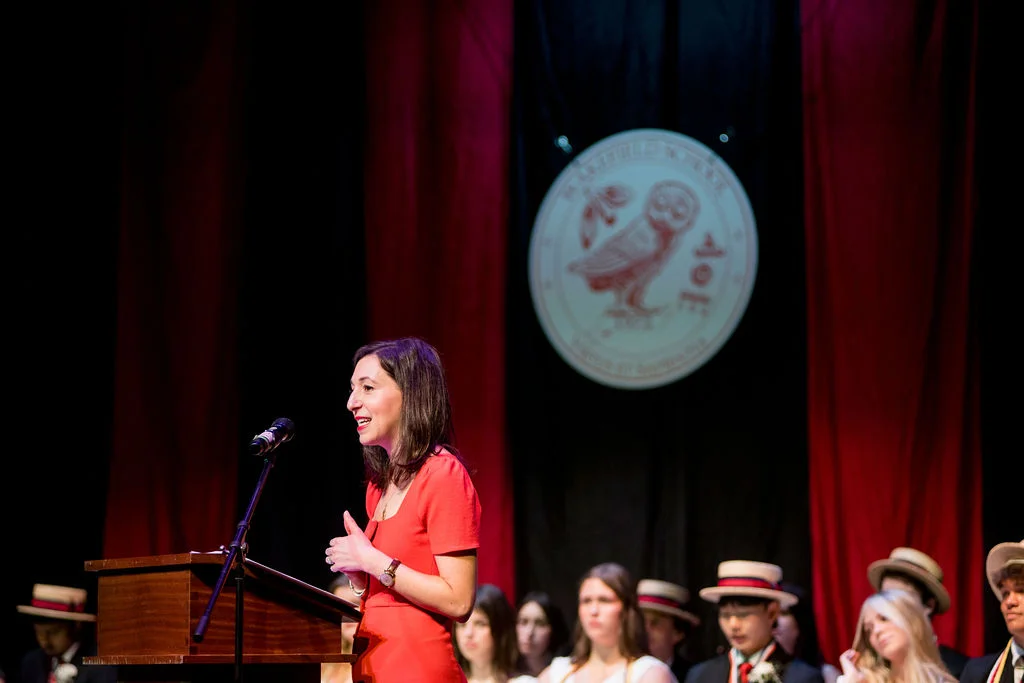 Jun23Curiosity, Meaning, and Service: Rachel Squire Munson ’06 Addresses the Class of 2026
In her Commencement address to the C...See Details
Jun23Curiosity, Meaning, and Service: Rachel Squire Munson ’06 Addresses the Class of 2026
In her Commencement address to the C...See Details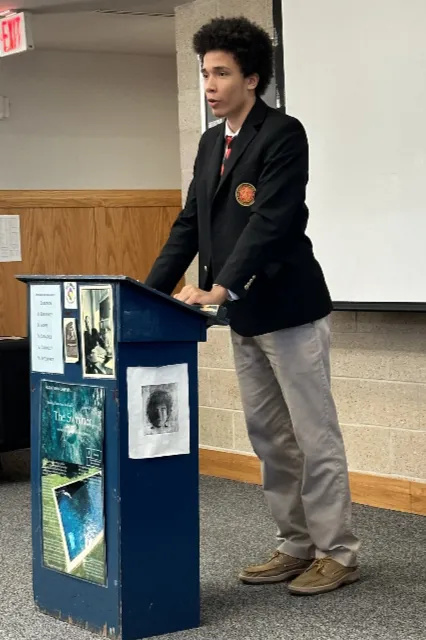 Apr6Scenes from School: "Words and Ideas Can Change the World"Part of our Scenes from School series,&n...See Details
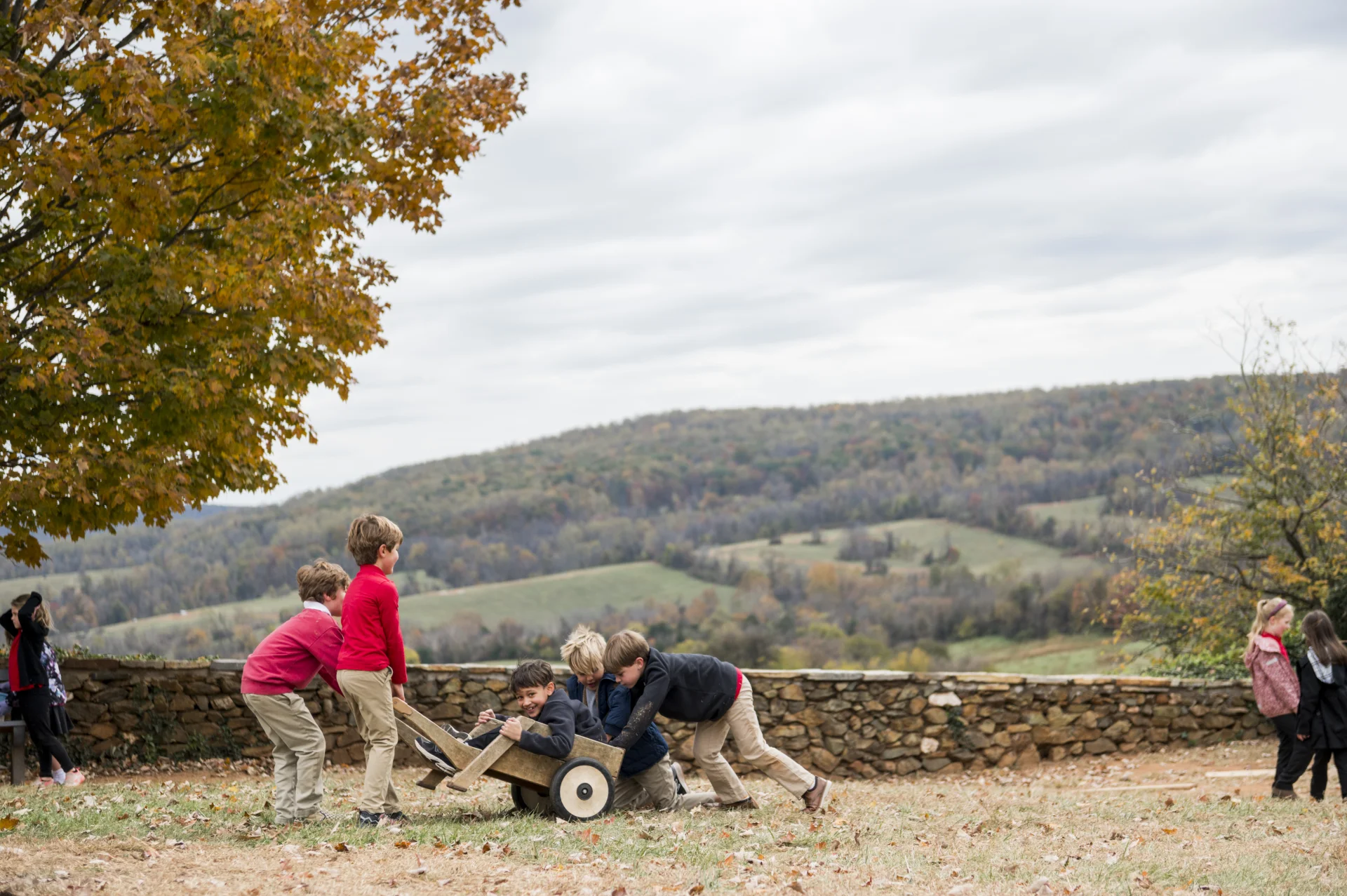 Apr1Strengthening Leadership to Support Wakefield’s Growing VisionWakefield School is strengthening its le...See Details
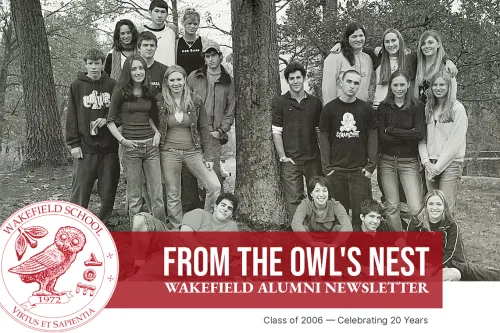 Apr1From the Owl's Nest: Familiar Faces Worth Celebrating (Spring 2026)
The Spring 2026 edition of From the ...See Details
Apr1From the Owl's Nest: Familiar Faces Worth Celebrating (Spring 2026)
The Spring 2026 edition of From the ...See Details


 News
News Thought Leaders


