
 Inquire
 Apply
Apply Give
Give My Wakefield
Beyond Awareness: Building Partnership in Protecting Children Online
November 6th, 2025



Beyond Awareness: Building Partnership in Protecting Children Online
Wakefield’s Parent Education Night, presented in partnership with the FBI, highlighted the importance of connection, communication, and community in today’s digital landscape.
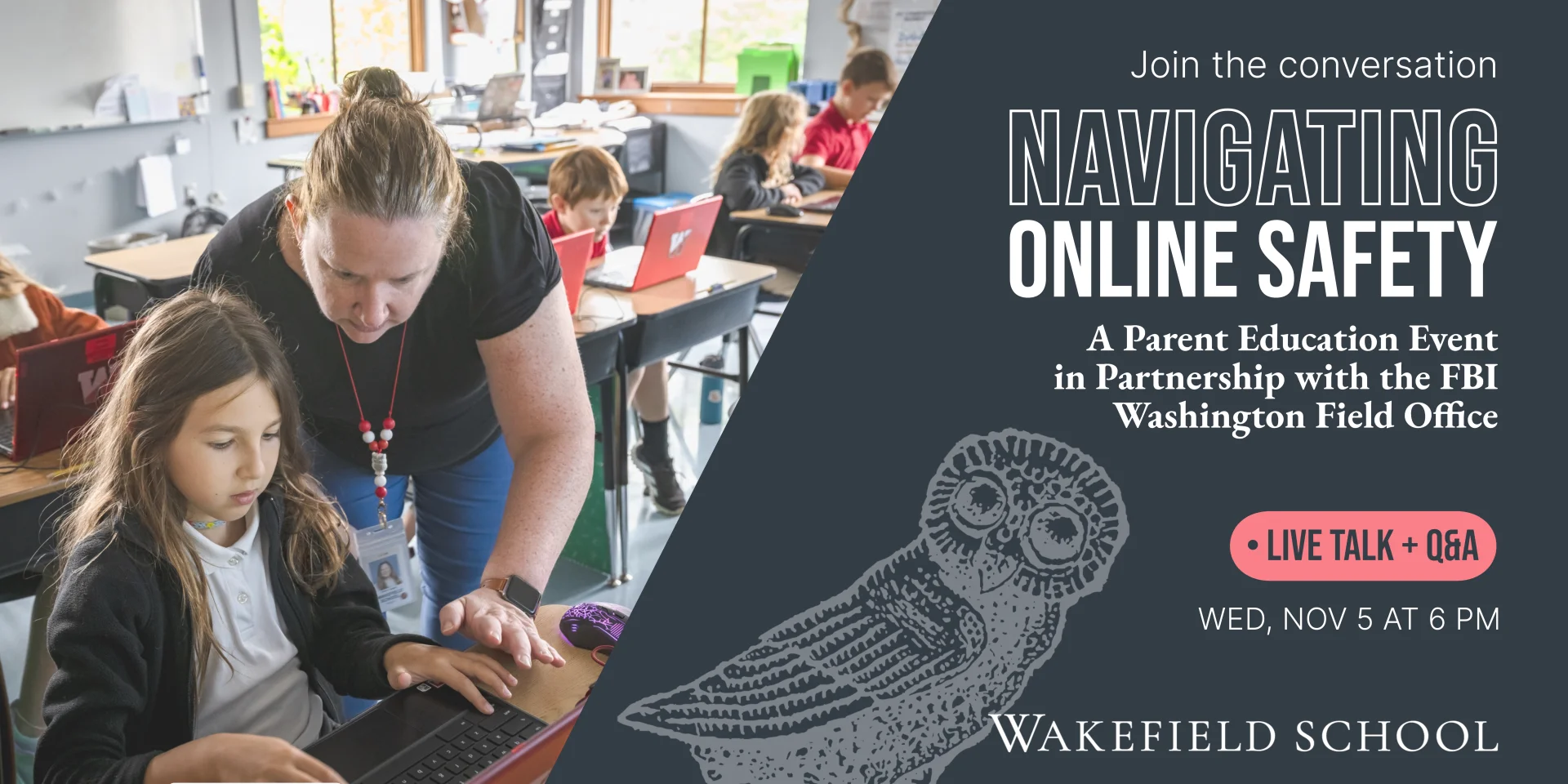
Wakefield School welcomed agents from the FBI Washington Field Office’s Child Exploitation and Human Trafficking Task Force for an important and eye-opening Parent Education Night focused on helping families navigate today’s ever-changing digital landscape with confidence and care.
The evening addressed the growing risks children face online — from gaming platforms and social media apps to emerging AI technology that can manipulate photos and voices. FBI experts offered an unflinching look at how predators operate, while also providing parents with practical, empowering tools to help keep their children safe.
A Thought-Provoking Conversation
The event sparked reflection among parents and faculty alike. The biggest message of the night: awareness and communication are the best defenses. When families stay engaged, informed, and proactive, children gain the confidence and knowledge to navigate the digital world safely.
Key Takeaways for Families
The session was filled with clear, actionable advice for families. Among the most valuable insights shared:
- Talk early, talk often. The number-one takeaway: open, ongoing dialogue is a parent’s best defense. Talk to your children about what’s happening online — before something happens to them.
- Never share photos online. Even images shared with “friends” can be exploited. Predators often pose as peers to gain trust.
- Watch for “platform jumping.” Groomers frequently move conversations from one platform to another — for example, from Roblox or Discord to a private messaging app. This shift is a major red flag.
- Understand how AI changes the landscape. Artificial intelligence can now recreate children’s photos, voices, and likenesses in deeply concerning ways. Education and vigilance are essential.
- Download what your kids use. When your child joins a new app or platform, download it yourself and explore it. Many apps, like Snapchat, have hidden features—such as the “For My Eyes Only” folder—that require an extra password and can conceal content.
- Use trusted educational tools. The FBI recommended NetSmartz and KidSmartz, engaging, age-appropriate resources that help families and educators teach online safety and smart digital behavior.
- Delay smartphones when possible. The Wait Until 8th campaign encourages families to delay giving kids smartphones until at least eighth grade (around age 14). Research shows early phone use is linked to lower focus, reduced emotional resilience, and sleep and mental health challenges.
These insights—and the questions they raised—sparked a larger conversation about how families and schools can work together to guide children’s relationship with technology.
A True Partnership Between Home and School
The most powerful takeaway of the night wasn’t fear — it was connection. Parents, faculty, and FBI experts came together in honest dialogue, with a shared sense of purpose & responsibility.
Parents offered thoughtful suggestions, including interest in extending this conversation to future sessions where parents and students could attend together.
Head of School Ashley Harper echoed that spirit of collaboration, emphasizing how vital it is for schools and families to navigate these challenges side by side. She reinforced that meaningful conversations about safety and digital awareness begin at home, with the school there to support and strengthen them.
Harper spoke candidly about the importance of understanding parents’ comfort levels and how essential that partnership is in shaping the school’s approach. Wakefield relies on open communication with families to help determine when and how these important discussions should take place — because ultimately, we’re in this together.
Head of Lower & Middle Schools Kerry Owen also encouraged parents to lean on their networks. If you hear or see something concerning online, share it within your parent circles. The more informed families are, the better prepared everyone is to respond quickly and effectively.
A Community Committed to Learning Together
The evening closed with an engaging Q&A, including one of the most common questions from parents: When is the right age to give a child their first phone?
While the FBI experts avoided prescribing specific parenting rules, Head of School Ashley Harper shared research and the Wait Until 8th initiative, encouraging families to delay smartphone use until eighth grade (around age 14).
She invited parents to partner with the school in making this Wait Until 8th pledge — a united commitment to support children’s social and emotional health by delaying smartphone use until they’re ready.
Research from the campaign shows that early smartphone use can affect both brain development and mental health.
A National Institutes of Health study found that children who spend more than two hours a day on screens score lower on language and thinking tests, and heavy screen use is linked to premature thinning of the brain’s cortex—the area responsible for processing information and decision-making.
Other studies show that social media use before age 13 correlates with lower self-esteem, increased anxiety, and decreased emotional resilience.
The message is clear: waiting gives kids time to build the confidence, focus, and social awareness they need before stepping into the digital world.
READ MORE ABOUT THE 12 REASONS TO WAIT UNTIL 8th
A Foundation for Ongoing Conversations
The night was a clear reminder that keeping kids safe online isn’t just about technology — it’s about partnership, awareness, and shared responsibility.
Wakefield’s Parent Education Series is designed to bring timely, meaningful conversations to our community — creating space for families to learn, reflect, and grow together.
Through events like this, Wakefield continues to help families stay informed, proactive, and confident in guiding their children through today’s digital world. By connecting parents with trusted experts and practical tools, we strengthen the partnership between home and school — and support children as they navigate an increasingly complex world.
Resources for Families
NetSmartz
An educational program of the National Center for Missing & Exploited Children (NCMEC) that provides age-appropriate videos, activities, and discussion guides to help children learn safe online behaviors in a fun and engaging way.
Visit NetSmartz
KidSmartz
A child safety program that teaches K–5 students and their families how to prevent abduction and practice safer behaviors through interactive games and role-playing activities.
Visit KidSmartz
National Center for Missing & Exploited Children (NCMEC)
A trusted national resource providing education, prevention tips, and reporting tools to protect children from exploitation, online dangers, and abduction. Parents can report concerns or seek support through NCMEC’s CyberTipline.
Visit NCMEC
Wait Until 8th
A grassroots movement encouraging parents to delay giving their children smartphones until at least 8th grade (around age 14), helping kids focus on relationships, creativity, and confidence before entering the digital world.
Learn More about Wait Until 8th
For questions or more information about parent education programming at Wakefield School:
[email protected] | 540-253-7501
Learn More About Our Next Parent Education Event
Other Articles to Consider...
 Jun23Curiosity, Meaning, and Service: Rachel Squire Munson ’06 Addresses the Class of 2026
In her Commencement address to the C...See Details
Jun23Curiosity, Meaning, and Service: Rachel Squire Munson ’06 Addresses the Class of 2026
In her Commencement address to the C...See Details Apr6Scenes from School: "Words and Ideas Can Change the World"Part of our Scenes from School series,&n...See Details
 Apr1Strengthening Leadership to Support Wakefield’s Growing VisionWakefield School is strengthening its le...See Details
 Apr1From the Owl's Nest: Familiar Faces Worth Celebrating (Spring 2026)
The Spring 2026 edition of From the ...See Details
Apr1From the Owl's Nest: Familiar Faces Worth Celebrating (Spring 2026)
The Spring 2026 edition of From the ...See Details



 News
News Thought Leaders


