
 Inquire
 Apply
Apply Give
Give My Wakefield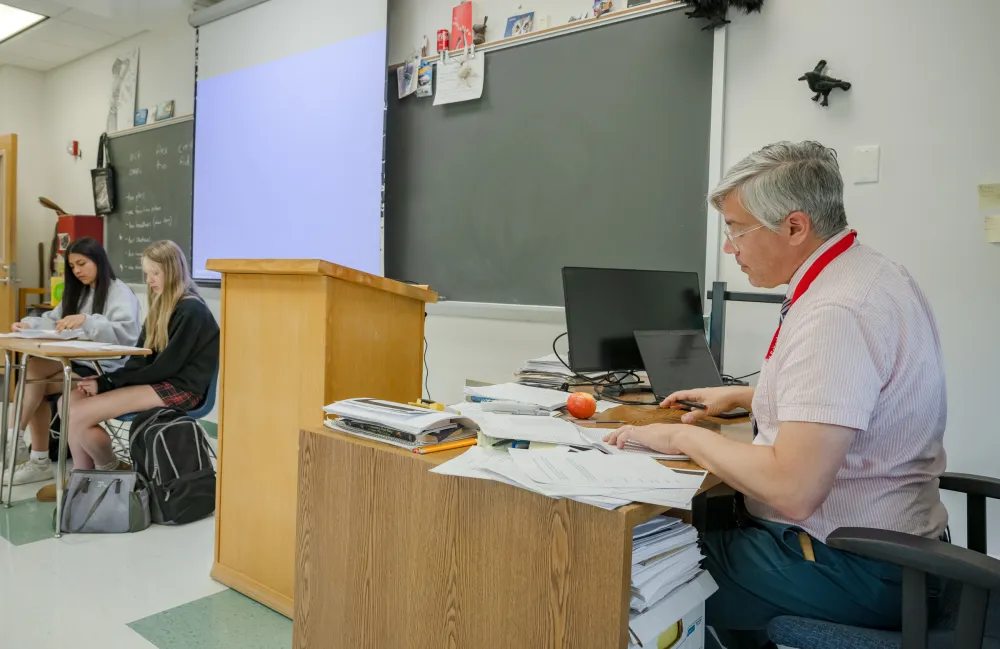
Scenes from School: The Great Martin-y
December 1st, 2025



Scenes from School: The Great Martin-y
A glimpse into Mr. Martin’s sophomore Literature class, where a single sentence opens a world of meaning.
By Matt Zontine, Academic Dean & English Department Chair
About This Series: Each month, Wakefield’s Upper School Academic Dean and Middle School Advisory Dean share reflections on the life of the school — moments of discovery, collaboration, and joy that unfold beyond the traditional classroom. We’re pleased to share some of these stories here, offering a glimpse into the spirit of learning that defines Wakefield.
For a while, these reveries provided an outlet for his imagination; they were a satisfactory hint of the unreality of reality, a promise that the rock of the world was founded securely on a fairy's wing.
One sentence. Not a simple one by any means, but still one sentence. From this one line in F. Scott Fitzgerald’s The Great Gatsby, Paul Martin spun a twenty-five-minute discussion with his sophomore Literature class this past month.
The class of ten students was not the least bit bored by this micro-dissection of one sentence from an 180-page novel. To the contrary, every student was wide-eyed and engaged in this literary version of the CSI franchise. Every student contributed to the conversation, and many of them did so multiple times.
Ema S. suggested that “Gatsby is so stuck in his own imagination that he keeps adding and adding, he does not really start something.” Avery M. deconstructed the line to comment that Gatsby’s “reality is anchored in Daisy. Her maiden name is Fay, and [Fitzgerald writes] it is on a fairy’s wing, and a fairy is a fay.” (Who knew? I looked it up, and Avery is correct.) John R. argued that Jay Gatsby was “gaslighting himself” to make the world more tolerable. To which Mr. Martin replied with his trademark love of punnery, “Maybe he is Gats-lighting himself” [muffled chuckles followed].
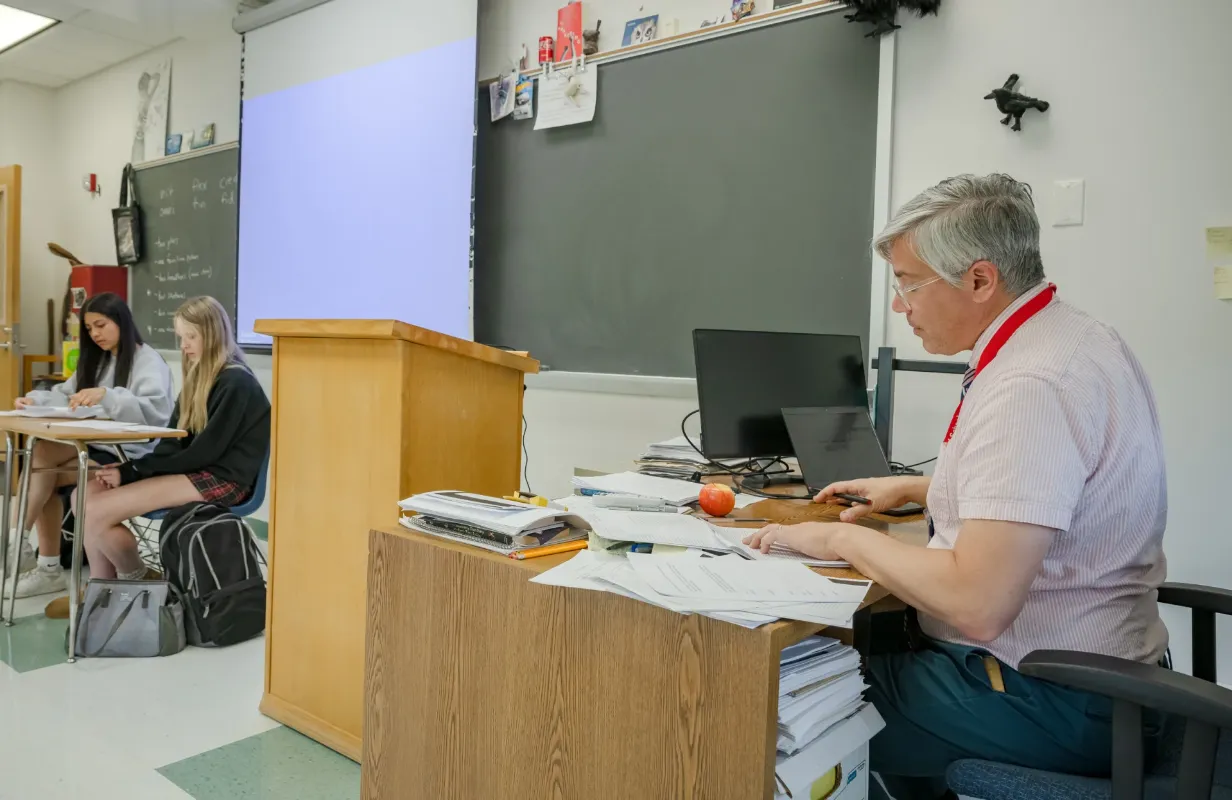
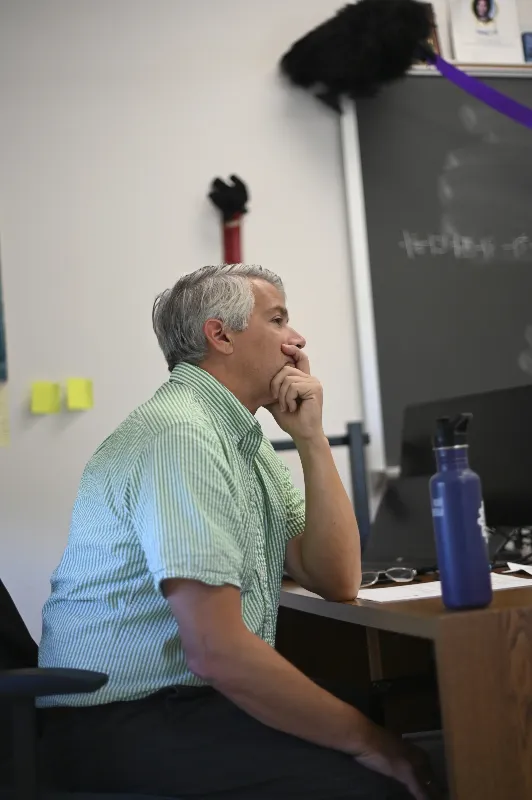
Like an alchemist generating gold from a stone, Mr. Martin has been mining treasure in room 304 for nearly twenty years. Whether he is examining bird symbolism in Kate Chopin’s The Awakening or requiring his students to properly spell receive on the honor pledge (it is “i” before “e” except after “c”), Paul Martin believes that the small things matter--details are important. Thus, an exhaustive deep dive into one sentence from a novel was not surprising to this observer.
When asked about his pedagogy, Mr. Martin remarked, “I want the students to see that through collecting a series of passages, all of which are expressive of a particular theme or idea, and then walking through the details of each one, we are able to look at the way the author has presented certain material. In this case, it is Gatsby as a romantic.”
He prepares the students for this intricate exercise by providing them, prior to class, with a lens through which to examine the text. He adds that “when they come to class, and we are walking through the passages, they have already set their eyes on them [and] they have the enjoyment of sharing some of their findings, hearing that those findings are confirmed or reinforced by me or their peers.”
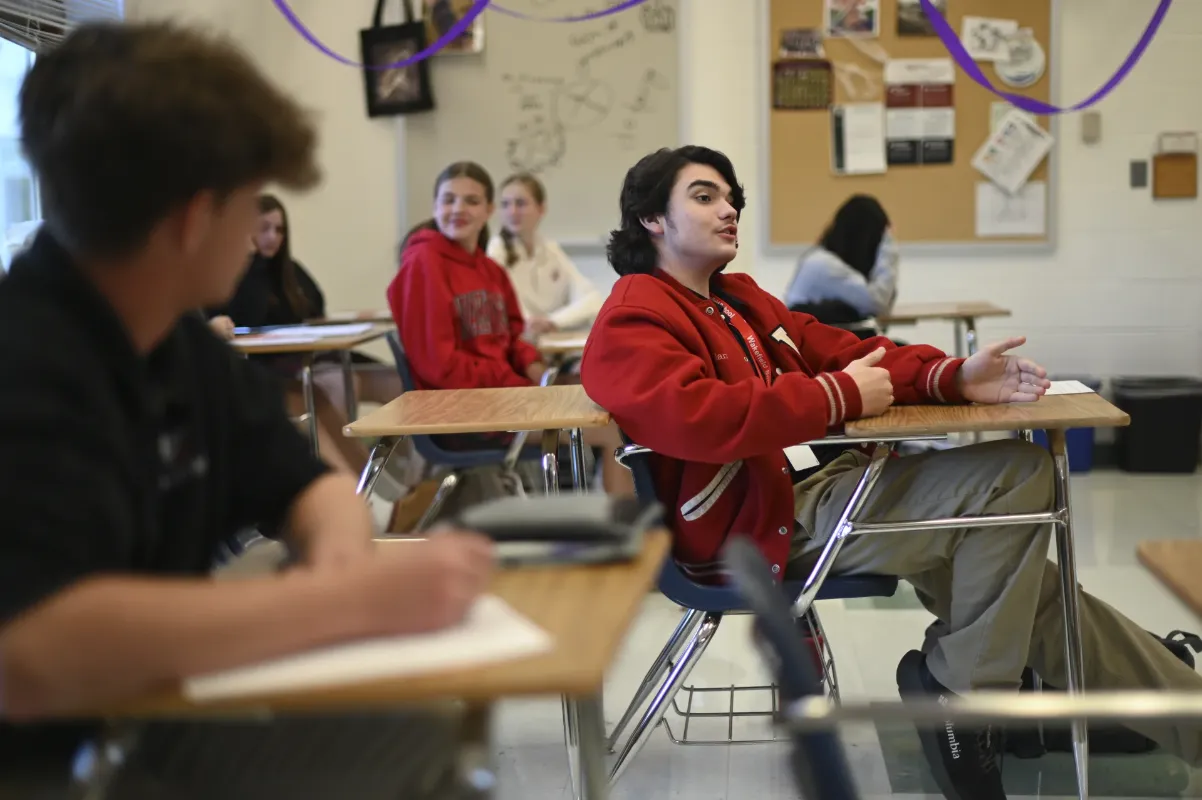
Mr. Martin was particularly pleased with the maturity with which the students discussed the material in this recent class. “They are aware that they do not want to be repetitive. I love the fact that they express their creativity [in their responses]. Oliver’s [C.] comment about the “rainbow soup,” for instance. He comes up with some great visual illustrations that seem a little wacky or out of the box, but they serve the point of clinching some idea.”
Watching Mr. Martin teach The Great Gatsby for a mere twenty-five minutes, one cannot help but understand his love for the novel and for teaching. With regard to the novel, he wants to put a “different spin on the greatness of Gatsby” in comparison to traditional readings. He contends that, “What is great about Gatsby is not his car, his parties, his house, but his extraordinary gift for hope, his heightened sensitivity to the promises of life.”
What is great about Mr. Martin is that he notices these details and, more importantly, helps his students see and appreciate them as well.
Other Articles to Consider...
 Jun23Curiosity, Meaning, and Service: Rachel Squire Munson ’06 Addresses the Class of 2026
In her Commencement address to the C...See Details
Jun23Curiosity, Meaning, and Service: Rachel Squire Munson ’06 Addresses the Class of 2026
In her Commencement address to the C...See Details Apr6Scenes from School: "Words and Ideas Can Change the World"Part of our Scenes from School series,&n...See Details
 Apr1Strengthening Leadership to Support Wakefield’s Growing VisionWakefield School is strengthening its le...See Details
 Apr1From the Owl's Nest: Familiar Faces Worth Celebrating (Spring 2026)
The Spring 2026 edition of From the ...See Details
Apr1From the Owl's Nest: Familiar Faces Worth Celebrating (Spring 2026)
The Spring 2026 edition of From the ...See Details



 News
News Thought Leaders


