
 Inquire
 Apply
Apply Give
Give My Wakefield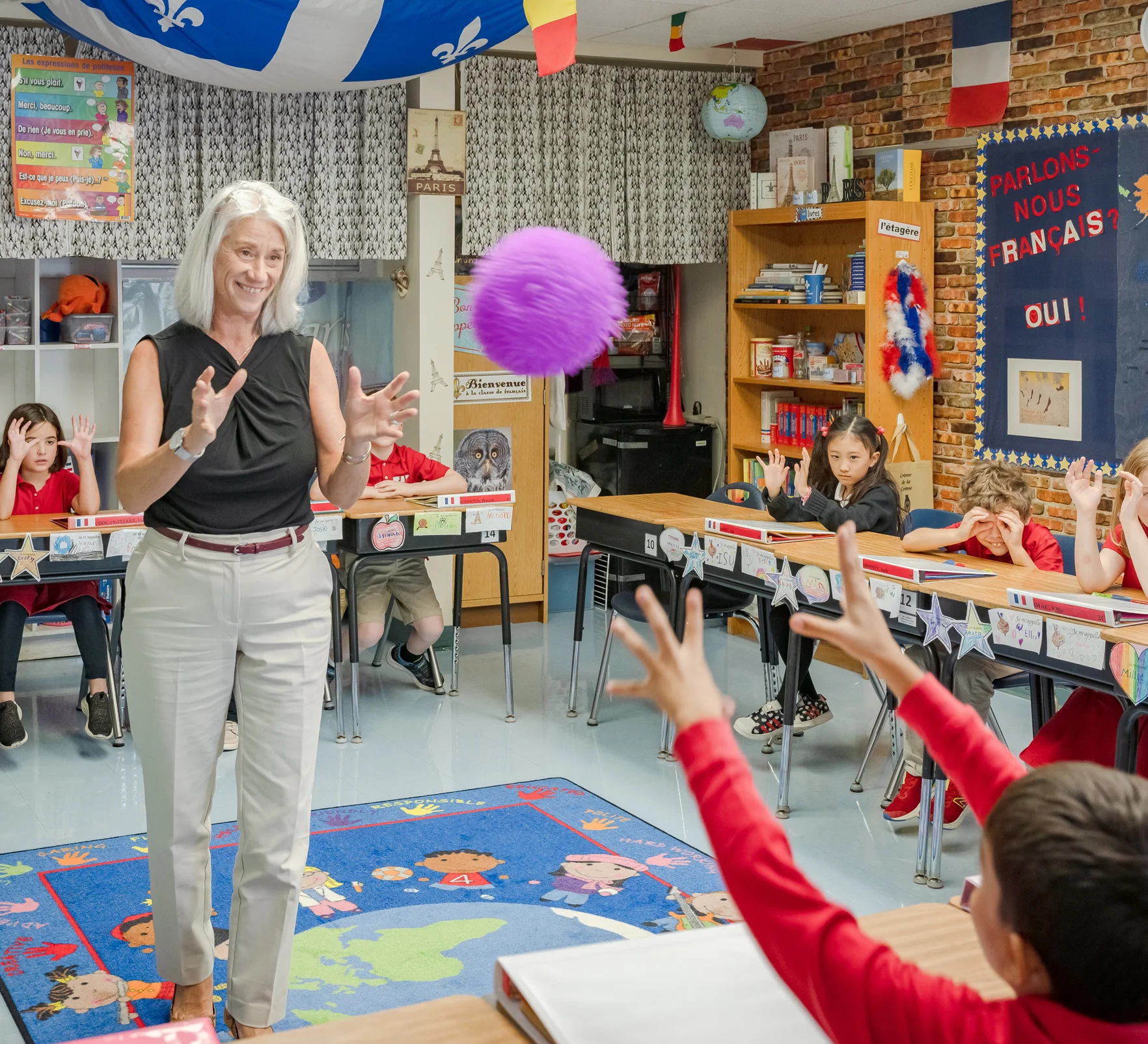
Global Citizenship: World Language Study as a Pathway to Broad Horizons
October 1st, 2024



Global Citizenship
World Language Study as a Pathway to Broad Horizons
By Tutt Stapp-McKiernan
Published in: Warrenton Lifestyle Magazine - October 2024, p. 10 & Haymarket Gainesville Lifestyle Magazine - October 2024, p. 8
“The most important thing that we do is offer two languages, starting at age four! The earlier you start, the easier it is to learn a language–and not just learn, but develop a love and connection to language and to what it opens up for them.”
—Connie Lalonde
Many were shocked last year when some universities began to announce the slashing or even the elimination of their world languages departments—but the trend is broader than just those headlines. The State of Virginia no longer requires that a student take a world language to graduate, for example, and many elementary schools where enrichment language study had been offered are cutting those programs, either to meet budget constraints or to focus on different priorities.
There are, however, excellent reasons to study a second language, and to start that learning as early as possible. Aside from the fact that most selective colleges and universities still either encourage or require two to four years of the same world language, there are 21st-century learning objectives that are beautifully fulfilled by the study of another culture and its language.
At Wakefield School, a mission-based commitment to the cultivation of global citizens drives a robust and vibrant World Languages (WL) Department that begins at the beginning: JK students enjoy twice-weekly world languages experience in both Spanish and French, continuing through Grade 7. In Grade 8, students choose either Spanish, French, or Latin for their required Upper School studies—two years of the same language required, four years recommended.
Despite the necessary focus in the Upper School on the grammar, vocabulary, and verb conjugation that all language study requires, all of Wakefield’s WL teachers are in agreement that it is the sparking of curiosity, cultural awareness, and confident communication in the world community—in other words, the cultivation of global citizenship—that is the actual payoff for such systematic exposure.
Here’s what they have to say:
Ana Lizarraga, WL Department Chair and Spanish teacher for Grades JK-7: “In JK, we will tell them, ‘OK, we are going on a pretend trip! We are going to fly!’ and we show them the map and where we’re going to go…or we will show them objects from the country we’re studying and ask them to choose one they like and describe it. This expands their curiosity [about a different country]. We emphasize conversation, and curiosity.”
Connie Lalonde, French teacher for Grades JK-7: “We’ve always been clear that in the Lower School the goal is not to develop any level of proficiency. It’s more than just language—we talk about France, Canada, countries in Africa—there are more French-speaking people in Africa than in all the rest of the world combined! In Middle School, we have intentionally taken an approach that is cultural more than [strictly] language. It really is the key to global citizenship… especially now when students have the whole world at their fingertips, it is important to make connections in a positive way, to establish [understanding and] a rapport with someone.”
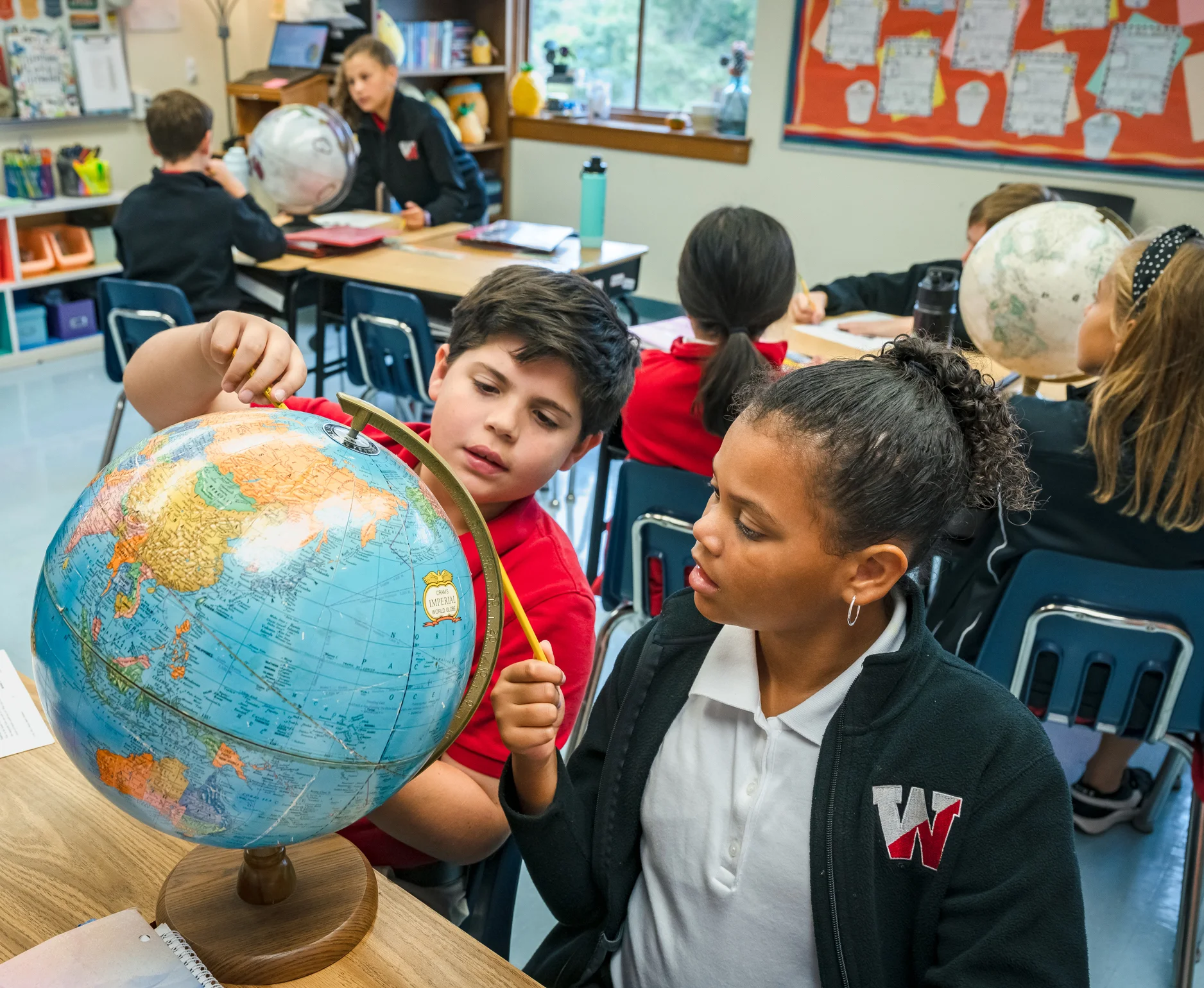
Makaila Daeschel, Latin teacher: “One thing I think of with Latin especially is, because I teach ancient languages and they’re dead, how can I approach that global identity?..I think the reason that a lot of kids take Latin is that it’s such an exciting culture—they are so interested in what the day to day life was like. And especially living in this area, where we have so much of it mirrored in the founding of the United States, that makes a connection [for the older kids].”
Casey Eriksen, upper level Spanish teacher: “Developing global citizens gives relevance to the study of language, connecting students to the world beyond Wakefield. The idea of being able to communicate with others piques student interest. We emphasize nuances that are specific to effective communication...even framing some work around how to write a friendly email and what tone to use in that application gives language study a practical aspect that students enjoy.”
Jeannine McKee, upper level French teacher: “We are living in a world where students in the future will travel and live in [other] countries. Learning a language will help them in their careers. We want to broaden their horizons, to broaden their vision of the world.”
From awakening curiosity about the world in the youngest students, to expanding Wakefield’s emphasis on articulate communication to the broader world, the study of other cultures and languages serves the school’s mission well. As Dr. Eriksen puts it, “The idea of becoming a global citizen makes language study fun and meaningful.”
Other Articles to Consider...
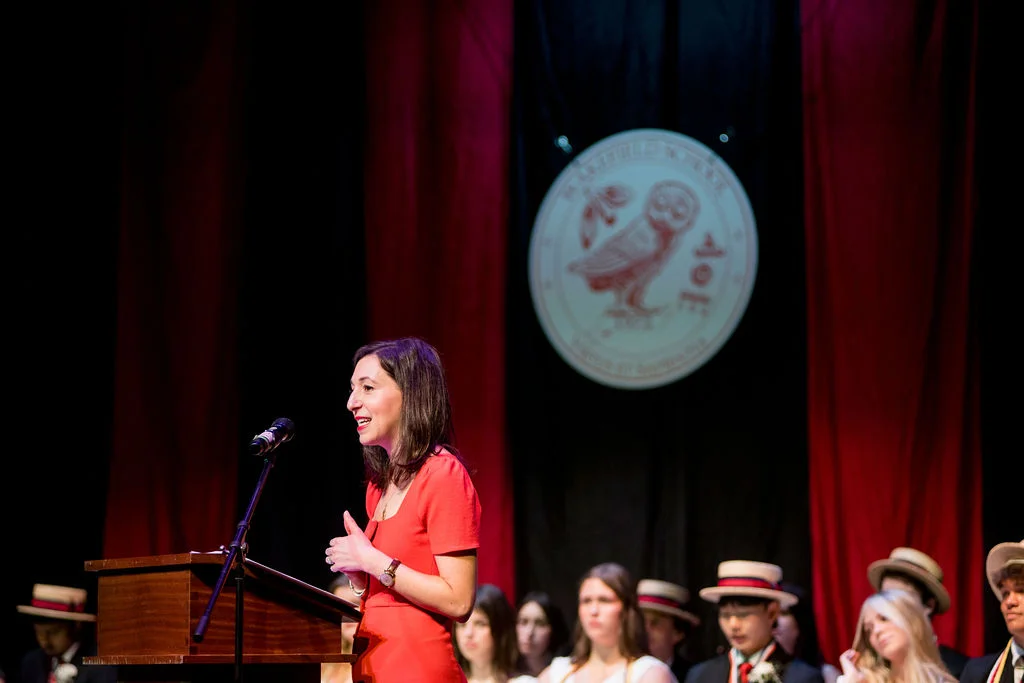 Jun23Curiosity, Meaning, and Service: Rachel Squire Munson ’06 Addresses the Class of 2026
In her Commencement address to the C...See Details
Jun23Curiosity, Meaning, and Service: Rachel Squire Munson ’06 Addresses the Class of 2026
In her Commencement address to the C...See Details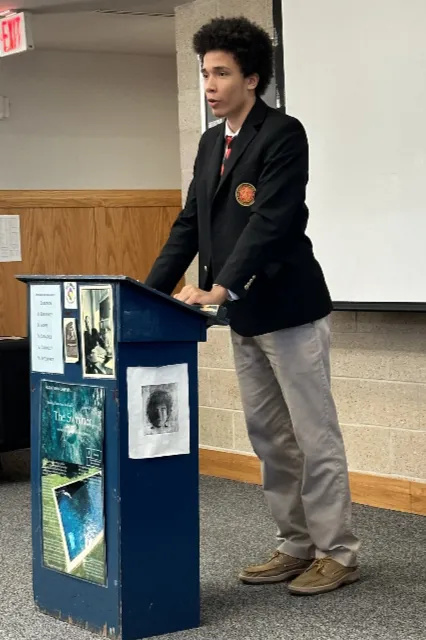 Apr6Scenes from School: "Words and Ideas Can Change the World"Part of our Scenes from School series,&n...See Details
 Apr1Strengthening Leadership to Support Wakefield’s Growing VisionWakefield School is strengthening its le...See Details
 Apr1From the Owl's Nest: Familiar Faces Worth Celebrating (Spring 2026)
The Spring 2026 edition of From the ...See Details
Apr1From the Owl's Nest: Familiar Faces Worth Celebrating (Spring 2026)
The Spring 2026 edition of From the ...See Details


 News
News Thought Leaders


