
 Inquire
 Apply
Apply Give
Give My Wakefield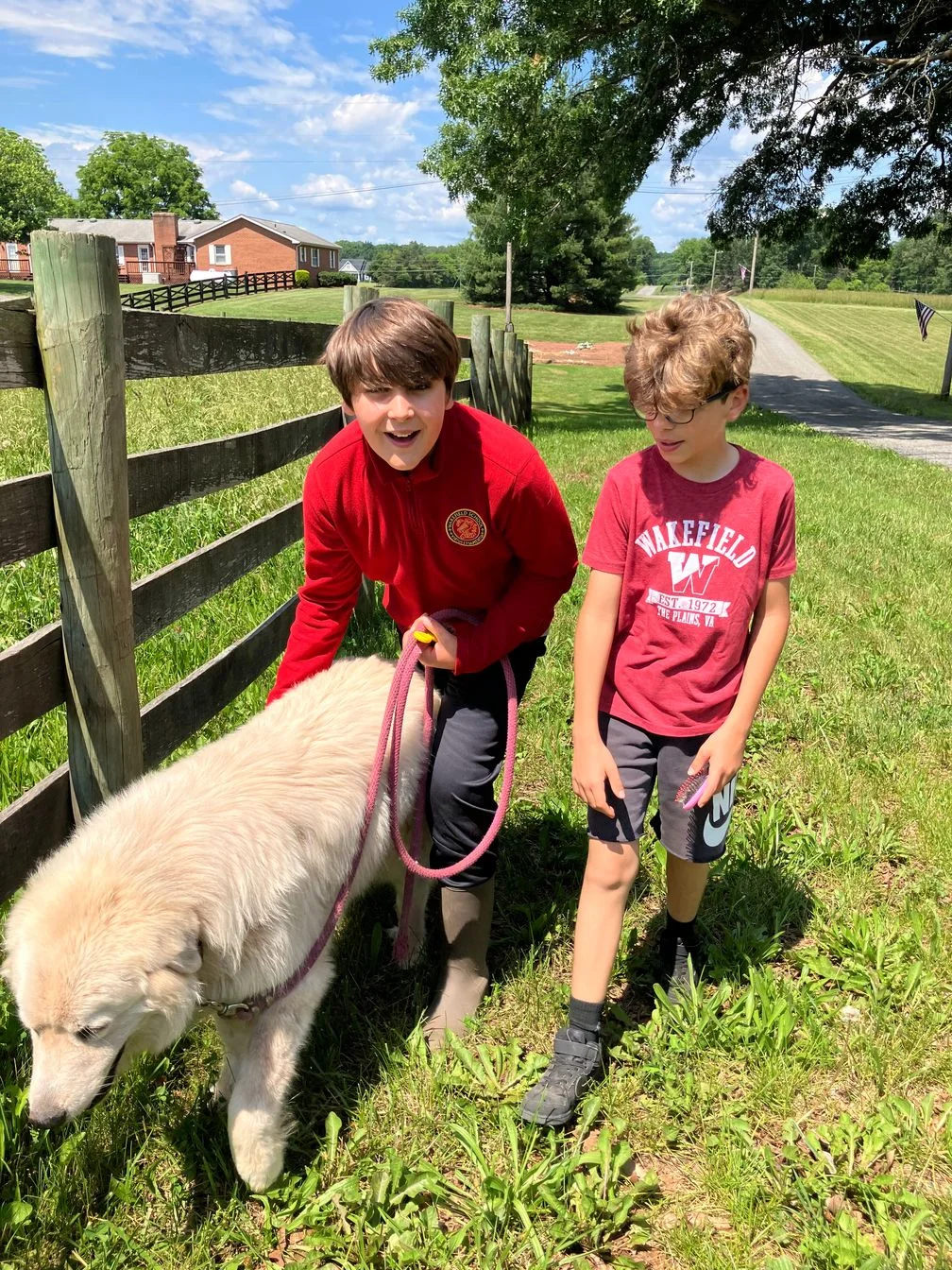
Mental Health and Wellbeing in the School Setting
September 1st, 2024



Mental Health and Wellbeing in the School Setting
By Tutt Stapp-McKiernan
Published in: Warrenton Lifestyle Magazine - September 2024, p. 12 & Haymarket Gainesville Lifestyle Magazine - September 2024, p. 10
“We can all help our students develop the skills and tools that help them become well-rounded, warm-hearted adults.”
—Dr. Amrit Daryanani
Schools are associated first and foremost with academic preparation—but in both schools and families, an increasingly examined subject today is how we balance the changing world, a college-prep academic program, and the mental and emotional wellbeing of our students. Where and how does student wellbeing intersect with other components of a contemporary and whole education?
For Dr. Amrit Daryanani, Director of Student Services and Wellness at Wakefield School in The Plains and known there as “Dr. D,” the role for wellbeing is not to intersect with other components, but to surround them.
“Wellbeing is almost the white space around academics,” she says. “We have concern for the overall wellbeing of our students, and that touches on so many different domains in their lives. Without wellbeing, academics is much harder! So this is an important area for us to consider here at school.”
Responsive vs. proactive
As schools seek to use their resources wisely in creating a healthy environment for students, they must balance being responsive to problems when they arise for individual students with being proactive, equipping students with the resilience and tools to understand, examine, and manage their own wellbeing, and thereby forestalling many problems in the first place.
“We have to have a counseling component that is ready to respond to problems, because in our world today, any news outlet is happy to share that there are a lot of problems right now in mental health, for all of us,” says Dr. D. “The other piece, though, of being more proactive, is also a beautiful piece that is continuously unfolding.”
According to Dr. D, “We approach wellness here from looking at many different domains…there’s the physical domain of wellness, there’s the emotional domain, there’s the cognitive domain, and the spiritual domain—and for those uncomfortable with the word ‘spiritual,’ just drop in the words ‘meaning’ and ‘purpose!’...So considering all the new research that’s coming to us on wellness [and on] the interconnectedness of the different domains, all of this informs us in continuously trying to adapt our programming and our support systems here on campus for our students.”
“Mental Health First Aid”
Dr. D thinks that one of the important steps Wakefield has taken is to train all of its faculty in “Mental Health First Aid” (MHFA), an evidence-based, early-intervention course that teaches participants about mental health and substance abuse challenges, sponsored by the National Council for Mental Wellbeing.
“MHFA gives us a community of adults that is accessible…we want for students to have lots of options for mentorship…[so] supporting faculty in being able to provide mentorship around issues of wellness and self-care is really important,” she says.
How do we help create a community of students who are vigilant about their own mental health and wellbeing? This ties to the idea of identity formation, an essential task of adolescence. MHFA encourages both faculty and students to share in this important step.
“MHFA emphasizes that self-care is an important component of wellness, and that faculty need to not only talk about it, but do it, and model it!” says Dr. D. “It’s an important piece of how we support students on their own journey to wellness.”
Volunteering
According to Dr. D, one of the most beneficial things a school can do to increase wellbeing is emphasizing to the students the importance of volunteering—and doing it with them!
“That piece of doing it with them is so key,” says Dr. D. “There is a sense of community and of comradeship that is built when you work together towards a positive end, and for something that students resonate with—something that truly interests them in terms of serving. One thing that I think families could do to really foster wellness is active volunteering together.”
Dr. D sponsors two ongoing volunteer efforts for Wakefield’s Upper School students: at the Middleburg Humane Foundation, and through the “Wood Ministry” at Grace Church in The Plains, helping elderly or infirm community members manage their firewood.
Volunteering, Dr. D emphasizes, is not just going out there to help—it’s not “one and done.”
“Volunteering on a regular basis is to enter into a relationship with an organization, and with all of the beings, whether they be human or animal or environmental, that that organization serves,” she says. “It’s a very deep and thoughtful process when it’s done with intention, and over time, and with support, and with follow-up.”
Other Articles to Consider...
 Jun23Curiosity, Meaning, and Service: Rachel Squire Munson ’06 Addresses the Class of 2026
In her Commencement address to the C...See Details
Jun23Curiosity, Meaning, and Service: Rachel Squire Munson ’06 Addresses the Class of 2026
In her Commencement address to the C...See Details Apr6Scenes from School: "Words and Ideas Can Change the World"Part of our Scenes from School series,&n...See Details
 Apr1Strengthening Leadership to Support Wakefield’s Growing VisionWakefield School is strengthening its le...See Details
 Apr1From the Owl's Nest: Familiar Faces Worth Celebrating (Spring 2026)
The Spring 2026 edition of From the ...See Details
Apr1From the Owl's Nest: Familiar Faces Worth Celebrating (Spring 2026)
The Spring 2026 edition of From the ...See Details



 News
News Thought Leaders


